
Ground-Based Observatories
The Vital Role of Ground-Based Observatories in Astronomy
TECHNOLOGY

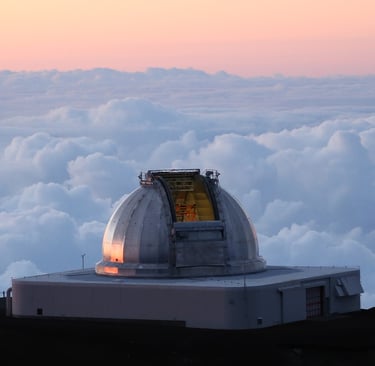
Ground-Based Observatories
Ground-based observatories are pivotal in the field of astronomy, serving as crucial platforms for observing celestial bodies and outer space phenomena. These observatories, which are located on or near the surface of the Earth, utilize various instruments and technologies to collect and analyze light and other forms of electromagnetic radiation from space. Unlike their space-based counterparts, ground-based observatories are accessible and often more cost-effective, making them an essential part of scientific exploration.
One of the primary roles of ground-based observatories is to monitor and track astronomical events. They capture data on stars, galaxies, and other cosmic entities, allowing astronomers to study their behavior, composition, and distance from Earth. By leveraging large telescopes and sophisticated imaging equipment, these observatories can conduct detailed observations.
Moreover, they help scientists gather essential data before sending missions into space. For instance, the analysis of atmospheric conditions, weather patterns, and potential landing sites for spacecraft often relies heavily on telescopic observations from the ground. This foundational research can greatly influence mission design, ensure safety, and enhance the chances of success.
Innovation
As technology continues to advance, so do the capabilities of ground-based observatories. Recent innovations include adaptive optics systems that compensate for atmospheric distortion, allowing astronomers to achieve higher resolution images of celestial objects. This advancement has made it possible to observe planets, moons, and other extraterrestrial features with remarkable clarity.
In addition to adaptive optics, ground-based observatories have also started to harness the power of artificial intelligence and machine learning. These technologies are utilized to analyze vast amounts of data, identify patterns, and automate the observation process. Such enhancements enable astronomers to focus more on interpreting their findings rather than getting bogged down by data management tasks. As we look to the future, the synergy between ground-based and space-based initiatives will undoubtedly lead to even greater discoveries, expanding our knowledge of the cosmos.