
Exploring Remote Sensing
The Techniques That Bring Earth to Life
TECHNOLOGY
What is Remote Sensing?
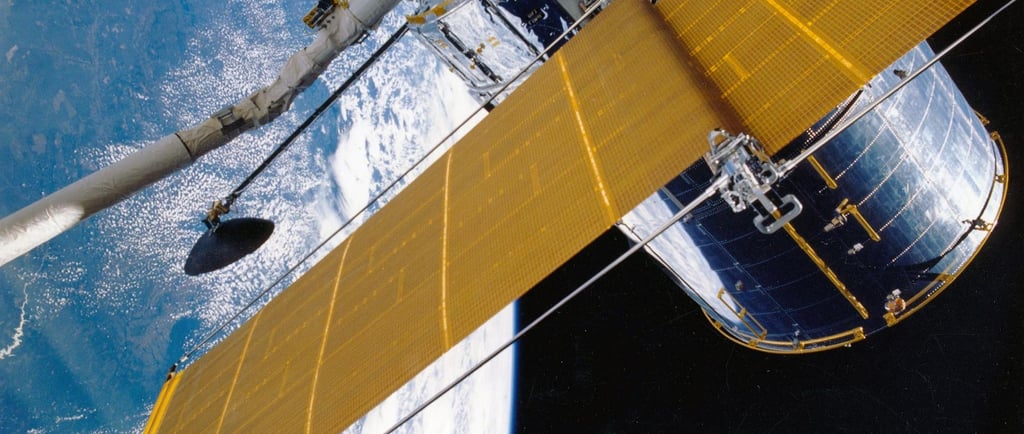
Remote sensing is a fascinating field that involves gathering information about the Earth's surface without making physical contact. This technology has undergone significant evolution over the years, enabling scientists and researchers to analyze large-scale environmental changes and monitor natural resources. But how does it actually work? Let's explore some of the primary techniques used in remote sensing.
1. Radar Technology
Radar (Radio Detection and Ranging) utilizes radio waves to gather data about objects. Crucially, this method can penetrate cloud cover or darkness, making it incredibly effective under varied conditions. A radar system sends out pulses of radio waves and listens for their echoes when they bounce back from surfaces or objects. This technique is widely used for mapping terrain, detecting changes in forest cover, and assessing damage from natural disasters.
2. Light Detection and Ranging
Lidar functions similarly to radar but employs laser light instead of radio waves. This method offers a higher level of accuracy and detail, which is essential for applications such as topographic mapping and forestry management. By emitting rapid pulses of light towards the ground and measuring the time it takes for each pulse to return, Lidar can create precise, three-dimensional models of terrain and vegetation. It’s like scanning the Earth to capture its many dimensions!
3. Hyperspectral Imaging
Hyperspectral imaging takes remote sensing to the next level by capturing images at multiple wavelengths across the electromagnetic spectrum. Unlike traditional photography, which captures just three colors (red, green, and blue), hyperspectral imaging can detect hundreds of different wavelengths. This capability allows scientists to identify materials, assess plant health, and monitor water quality with incredible specificity. It’s like giving our eyes the superpower to see beyond what we normally perceive!
Final Thoughts
The significance of remote sensing technology cannot be overstated. It plays a crucial role in various fields, including agriculture, urban planning, and environmental monitoring. Utilizing these advanced techniques, researchers can identify trends, address climate change impacts, and make decisions about resource management. As technology advances, we can only expect remote sensing techniques to improve, giving us even better insight into the dynamic world around us.